In the intensely competitive arena of contemporary serious oversteer competition, success is no longer purely a product of sheer horsepower or behind-the-wheel bravado. Instead, it is now a multifaceted engineering challenge which requires a painstaking marriage of choosing a time-tested chassis, arming it with the correct performance components, and, most critically, grasping its dynamic performance on the course through cutting-edge suspension tuning applications. This exhaustive guide functions as your master plan starting from the initial concept of a drift build right through to the final engineering-refined adjustments that transform a capable vehicle into a predictable champion. We will delve deep into the precise engineering of vehicle alignment optimization, illustrating how a modern drift tuning app like GripDial eradicates approximation and provides exceptional visibility into your vehicle's real-world dynamics.
The cornerstone of any successful competitive sliding vehicle is, indisputably, the chassis itself. Several vehicles have earned iconic reputation within the worldwide sliding community due to their built-in balance, durable construction, and the enormous availability of performance support available. Picking the optimal starting point is the primary and most important selection a enthusiast will make. As an example, the BMW's E36 3 Series is universally acknowledged as one of the greatest all-around cars for drifting of all time. Its excellent 50/50 weight distribution, combined with a driven rear axle configuration and bulletproof inline-six engines, forms a car that is at once accessible for novices and extremely effective in the hands of a professional driver. The next step of this lineage, the E46 model BMW, refines these attributes with a even more sophisticated chassis, broader track for greater high-speed stability, and even more turning capability directly from the OEM. Another powerful option in the professional scene is the C6 generation Corvette.
This V8-powered track weapon offers a particular set of strengths to the drifting discipline, featuring a low-mass alloy chassis, a backwards-positioned gearbox and differential unit that helps create an perfect balance, and the colossal thrust of a powerful GM LS engine. This blend makes it an absolute monster on track, designed of starting and holding continuous drifts with seemingly easy application of power. For those desiring remarkable performance per dollar, the Nissan 350Z excels as a top-tier example. It comes from the manufacturer with a rigid body structure, a competent original LSD, and the smooth VQ35DE engine that delivers sufficient power and torque for practicing and moving up in the discipline. Its newer version, the Nissan 370Z, offers more refinements in structural rigidity, handling precision, and peak engine output, cementing its position as a common selection among professional pilots. Further iconic cars that deserve consideration include the agile rotary-powered FC generation RX-7, the ever-present S13 Silvia/240SX, the torque-rich Ford Mustang SN95, the more recent E90 3 Series, and the compact yet incredibly playful and instructive Mazda Miata. Each of these platforms gives a different set of traits, difficulties, and capabilities, but they all possess the basic ingredients required to become a competitive drift machine.
However, choosing the right chassis is merely the beginning. To access the full potential of every of these vehicles, substantial modifications to the steering system and chassis control systems are utterly mandatory. This is where the domain of performance aftermarket parts comes into vital focus. The most most transformative modification for a purpose-built drift machine is the installation of a drift-spec steering angle kit. These engineered kits, such as those developed by specialist companies like specialist manufacturers, are designed to significantly expand the chassis's available steering angle. A factory road car is severely restricted in how far its tires can pivot, a safety limitation for public road use. In drifting, however, maximum steering input is continuously required to catch and sustain a angle. An modification kit substitutes the OEM uprights, tie rods, and sometimes control arms with components that allow the front tires to attain steering lock in excess of 70 or even 80 degrees, versus a average OEM limit of around 40 to 50 °.
This tremendously increased capability gives the operator with significantly more control during a drift, enabling it to be far more straightforward to start a slide, maintain it through a sweeping bend, and switch seamlessly from one direction to the opposite. The difference in handling is absolutely profound. Coupled with a correctly specified angle kit is the every bit as essential modification to the car's spring and damper setup. Generic or including expensive street adjustable suspension are just not engineered for the unique and brutal requirements of competitive oversteer. A dedicated system of coilovers is of utmost importance. These specific dampers feature specific valving and spring strength that are tuned for the rapid weight transfer that is inherent of aggressive driving. When a pilot starts a drift, the vehicle's inertia is thrown rapidly to the outer of the turn. Correct drift-spec suspension control this shift in a consistent manner, allowing the chassis to stabilize rapidly and giving the driver precise feel through the controls and cockpit. They furthermore allow for exact tuning of stance, rebound and compression rate, and corner weighting, which are all key parts of fine-tuning the car's handling to a given venue or piloting technique. As a system, a top-tier drift angle kit and a expertly selected system of drift-spec coilovers are the core mechanical foundation upon which all future refinement is constructed.
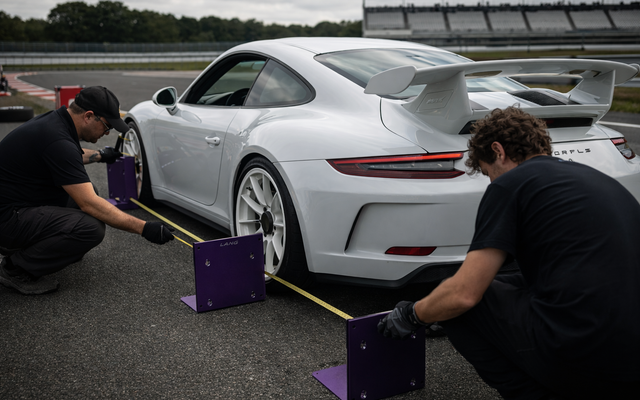
Once the core hardware is fitted, the next vital stage in the build is the detailed tuning of the vehicle's suspension geometry. This is the realm of chassis dynamics adjustment, a process that can appear daunting to the beginner but is, in reality, the key to converting a assembly of capable parts into a unified and consistent vehicle. The most discussed parameter of suspension geometry for sliding is certainly negative camber. Camber is the inclination of the wheel compared to the vertical line when observed from the forward of the car. When the upper part of the tire is leaning inward, this is called negative camber. For sliding, an inward tilt on the front axle tires is widely applied and is seen as necessary. The purpose is intrinsically linked to tire contact.
When a chassis is turning at high slip angles, the chassis rolls toward the outside of the turn. This lean forces the outer front wheel to diminish its ideal footprint with the track surface. By adding an inward tilt, the tire is pre-tilted to counteract this roll. As the car tilts into the bend, the tire becomes more upright against the asphalt, optimizing its traction at the precise point when it is most required for steering authority. Typically, front axle camber settings for a competition drift machine range from approximately -3 degrees to as high as -5 degrees or even greater, depending on the parameters of the car setup, rubber choice, and pilot preference. The back wheels also employ inward tilt, but the values are typically more conservative and less aggressive than the front. Excessive inward lean at the back can cause the vehicle to extremely tail-happy and hard to manage on power input, as it diminishes the available grip area of the powered wheels during linear power delivery. Hence, rear adjustments are frequently in the vicinity of -1 degree to -3 degrees, striking a delicate compromise between giving enough cornering grip to assist in entering and sustaining the drift while also maintaining usable traction for power-down the turn. camber angle is merely one component of the larger alignment equation, which furthermore includes toe angle, self-centering steering, and bump steer correction.
Toe angle describes the orientation of the tires when viewed from the top. Inward toe means the leading edges of the tires are nearer together than the trailing edges, while negative toe means the opposite. For sliding, a modest amount of front axle toe-out is often used to quicken the turn-in handling feel, making the chassis feel more responsive and willing to begin a slide. Rear axle toe setting is typically set to neutral or a incredibly slight amount of inward toe to foster predictability under acceleration. self-centering is the longitudinal or backwards inclination of the suspension pivot when viewed from the side of the vehicle. Positive positive caster increases self-centering and stability confidence, and it also adds to inward lean increase during steering, which is extremely beneficial. Setting these values is a intricate dance where a modification to a single setting can and often will influence the others. The traditional process for setting a vehicle's suspension geometry for drifting has for a long time been a tedious endeavor of trial and error. A tuner or engineering group would make a adjustment based on a hunch, test the chassis on track, use the operator's personal perception and comments, and then introduce a further tweak. This loop would iterate over and over until the chassis felt "acceptable" or the available practice time was exhausted. This approach is not just extremely wasteful in terms of time and tires, fuel, and parts, but it is furthermore fundamentally inaccurate.
Pilot perception is a notoriously subjective data source, colored by many factors such as tiredness, evolving track conditions, ambient heat, and merely the focus of the driver on that particular session. What feels "tail-happy" on one lap might feel "pushing" on the subsequent pass, leading to conflicting information and counterproductive tweaks. This age-old challenge in vehicle dynamics optimization is exactly where state-of-the-art technology has stepped in to revolutionize the process.
The rise and application of sophisticated vehicle dynamics tools has ushered in a new era for engineering and optimizing competitive drift machines. This new generation of tools, showcased vehicle dynamics tool by innovative solutions like data acquisition tools, function by physically recording the real-time physical behavior of the car as it is being driven on the track. In contrast to using subjective feedback, these systems gather quantifiable information on essential variables such as shock absorber movement, wheel speed, G-force loading, lock position, and accelerator and brake pedal position. This acquired data stream is then interpreted by advanced software that can visualize and decode the data in a clear manner. For the first time ever, engineers and teams can visualize precisely what the car is performing at every point of a slide. This ability changes the entire chassis setup procedure. Think about the specific task of setting the front negative camber for a particular vehicle. Instead of applying a change from -3 degrees to -3.5 degrees and then testing many laps to try and "perceive" a difference, a telemetry system can provide instant and definitive data. The software can show visually how the tire's grip is acting during the critical phases of a slide: the initial flick, mid-corner, and switch. It can show if the present value is allowing the steering tire to keep ideal loading or if the tire is over-stressed on its outside shoulder.
The software can after analysis suggest data-driven recommendations for change. Perhaps the telemetry indicates that the outside front tire is even overworking its sidewall at -3.5 degrees of negative camber, implying that even more negative camber, say -4 degrees, might be beneficial. Conversely, the data might show that the tire is not coming up to temperature or that the inner edge is degrading unevenly, which could point to that there is overly aggressive angle and a small decrease back to -3.2 degrees would be more optimal. This degree of precision and practical analysis was literally unattainable in the days of solely manual setup.
The effect of employing a comprehensive drift telemetry system reaches much further than only setting camber angles. It becomes an invaluable damper adjustment manual coilover setup tips that is specific to your specific car. When setting the rebound and compression settings on your suspension, rather than relying on general tips or copying another car's settings, you can use the software to observe how the car is reacting in response to your tweaks. The application can display the damper movement path over a lap, showing if the dampers are handling the chassis motion optimally or if they are permitting the vehicle to oscillate uncontrollably after a direction change. It can aid in diagnosing issues like excessive compression or excessive extension, enabling you to apply informed choices to helper springs, damping settings, or stance. This process translates similarly to the complex process of car alignment tuning. Beyond camber angle, the software can provide data into how adjustments to toe settings and caster are impacting the car alignment tuning chassis's handling during specific maneuvers of a lap. For example, it can help you to ascertain the best amount of front axle toe out for your individual steering configuration and competition approach by measuring the speed of initial reaction and the predictability of the chassis at maximum lock. This transforms the software an exceptionally powerful vehicle dynamics manual that is constantly updated by the actual behavior of your specific vehicle on the tarmac. It moves the complete endeavor from a mysterious craft into a methodical engineering process.
Moreover, the value of a platform like modern telemetry is not at all restricted to experienced teams with vast budgets. For the club-level driver, it acts as an amazing equalizer. It practically gives the builder with the insight of a expert suspension specialist without requiring the typical expense. It speeds up the development time by providing definitive solutions to questions that would traditionally take seasons of experience to answer. A tuner can learn how their individual car responds to specific adjustments, building a more intuitive comprehension of vehicle dynamics in the journey. It furthermore makes accessible professional chassis dynamics concepts, permitting anyone with the desire to refine their vehicle to do so in a efficient and effective fashion. This is particularly valuable in a sport like sliding, where engineering know-how has in the past been a closely guarded advantage among top drivers. In the modern era, that knowledge can be in the toolkit of every dedicated builder.
In summary, the process to engineering and dialing in the perfect championship-contending drift machine is a multi-stage mission that perfectly combines classic hardware principles with revolutionary telemetry technology. It starts with the informed selection of a capable car, then built upon the installation of essential drift-spec parts like maximum-angle steering angle kits and expertly valved competition adjustable dampers. The build then moves into the precision realm of alignment optimization, where values like negative camber, toe setting, and caster are carefully set to suit the car's modified geometry and the pilot's individual technique. Ultimately, and what genuinely distinguishes the contemporary approach from the past, is the integration of a sophisticated drift telemetry software. This tool eradicates the approximation and trial and error of only subjective adjustment by giving quantifiable, live data on how the vehicle is really behaving. It serves as an incredible suspension tuning tool, a actionable coilover setup manual, and a comprehensive vehicle dynamics tool. Together, this holistic methodology guarantees that every aspect of the competition vehicle—from the choice of the chassis to the most minute click on the suspension—is refined for maximum success on the circuit. It represents the total maturation of the art of oversteer driving, merging mechanical car control with precise vehicle setup to build the perfect competitive vehicles imaginable.